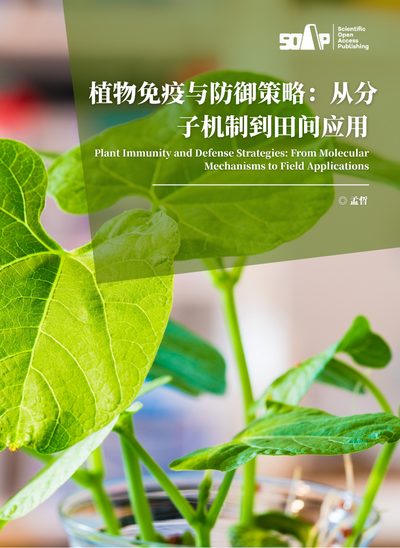
Plant Immunity and Defense Strategies: From Molecular Mechanisms to Field Applications
植物免疫与防御策略:从分子机制到田间应用
Detailed Information
Author Introduction
Book Introduction
Catalog

Throughout their long evolutionary history, plants have been constantly exposed to complex and ever-changing biological stress environments. Unlike animals, plants cannot actively evade pathogens; instead, they rely on highly sophisticated perception and defense systems to cope with the continuous threats from bacteria, fungi, viruses, oomycetes, herbivorous insects, and parasitic plants at both the local and systemic levels. It is under this long-term and intense survival pressure that plants have gradually evolved a hierarchical, precisely regulated, and highly plastic immune system, constituting one of the most representative host-pathogen game models in nature.
Over the past two decades, with the rapid development of molecular biology, genomics, and systems biology, our understanding of plant immunity has undergone a profound transformation from “single-gene resistance” to “signal network regulation,” and then to “multi-scale integrated defense.” The introduction of pattern-triggered immunity (PTI) and effector-triggered immunity (ETI) models laid the theoretical foundation for modern plant immunology; the continuous discovery of immune receptor families, hormone signaling networks, transcriptional reprogramming, and systemic resistance mechanisms has greatly enriched the research content of this field. Meanwhile, the introduction of high-throughput sequencing, multi-omics integrated analysis, and quantitative modeling methods has gradually shifted plant immunity research from descriptive analysis to mechanistic analysis and systemic prediction. However, in contrast to the rapid accumulation of research results, the high degree of fragmentation in theoretical frameworks, scale levels, and application directions makes it difficult for beginners to grasp the overall logic and also restricts the systematic transformation of basic research results into agricultural practice.
Against the backdrop of intensified global climate change, increased vulnerability of agricultural ecosystems, and rapid evolution of pathogens, single resistance strategies are increasingly revealing their limitations. The rapid adaptation of pathogen populations, the failure of resistance genes, and the potential impact of defense costs on crop growth and yield all indicate that plant immunity is no longer just a question of “whether or not to resist disease,” but a complex systems engineering project involving resource allocation, ecological stability, and long-term sustainability. How to understand the molecular mechanisms of plant immunity while taking into account evolutionary dynamics, energy costs, ecological interactions, and agricultural sustainability has become a core issue that cannot be avoided in plant immunity research. This book was written against the backdrop of this dual scientific and practical need, aiming to systematically analyze the structure, function, and regulatory logic of the plant immune system from the perspective of evolutionary game theory, constructing a holistic cognitive framework that spans molecular mechanisms, systemic signaling, and field applications.
Starting with “evolution and game theory,” the book first reviews the co-evolutionary history of plants and pathogens, explaining the practical significance of classic theories such as the Red Queen hypothesis in plant immunity research. Building on this foundation, it systematically discusses plant constitutive defense, PTI and ETI signaling networks, immune-related hormone regulation, systemic signaling, and immune memory mechanisms, further exploring the differentiated defense strategies adopted by plants against different types of pathogens and herbivorous organisms. Notably, this book not only focuses on the host’s own immune mechanisms but also incorporates the plant microbiome into the defense system, exploring the crucial role of symbiotic microorganisms in immune regulation, resistance stability, and ecological adaptation. By placing the immune response within a broader biological network and ecological context, this book strives to present the holistic and dynamic nature of the plant defense system.
In its writing approach, this book strives for a balance between theoretical depth and systematicity, avoiding a simple listing of research conclusions. Instead, it emphasizes the intrinsic connections and evolutionary logic between different immune levels, and focuses on the continuity and comprehensibility of concepts. The content is primarily intended for graduate students and researchers in plant science, molecular biology, and agriculture-related fields, while also serving as a reference for applied readers engaged in crop breeding, plant protection, and agricultural ecology research. It is hoped that this book will help readers establish a clear cognitive framework amidst the complex array of research findings and stimulate further reflection on the overall regulation, long-term evolutionary laws, and agricultural significance of the plant immune system.